
Professional Crawl Space Encapsulation Services in Charlotte, NC & Beyond
Protect Your Home’s Foundation, Slash Energy Costs, & Breathe Cleaner Air
Does your home suffer from musty odors, cupping hardwood floors, or soaring summer energy bills? In the Charlotte metro area, our native Cecil red clay soil and intense Piedmont humidity combine to create a perfect storm. This dense clay traps groundwater against your foundation, turning unventilated crawl spaces into breeding grounds for mold, wood rot, and structural decay.
At Fresh Air Technologies, we don’t just slap down plastic sheeting. Backed by over 25 years of local environmental expertise and led by a licensed environmental geologist, we deliver precision-engineered containment systems designed by professionals. We seal out moisture, improve your indoor air quality, and safeguard your home’s equity.
Fill out our contact form here, or give our technicians a call at (704) 270-2721!
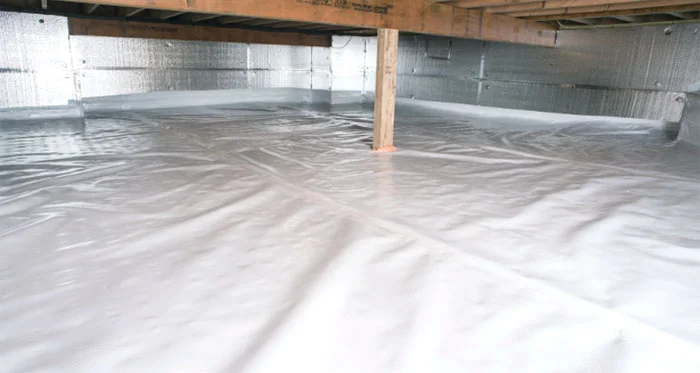
What is Crawl Space Encapsulation? (And How We Do It Better)
Plain and simple, encapsulation is the process of transforming a damp, vented crawl space into a clean, conditioned, energy-efficient envelope. While generic contractors use thin, hardware-store plastic (usually 6-mil or 10-mil) that tears easily and degrades under hydrostatic pressure, the Fresh Air Technologies team utilizes a scientifically backed, multi-step containment protocol:
- Heavy-Duty 20-Mil Vapor Barriers: We install ultra-durable, puncture-resistant white liners across the dirt floor and up the foundation walls.
- Mechanically Fastened & Seam-Sealed: Every edge is securely anchored to your foundation and sealed with commercial-grade waterproof tape to stop soil gases (including radon) and vapor transmission.
- Active Moisture Control: We install heavy-duty sump pumps to evacuate standing water and commercial-grade dehumidifiers tailored to your crawl space’s specific cubic footage.
- Integral Structural Additions: If needed, our team performs precise air duct sealing to ensure your HVAC system stops sucking in dirty, sub-floor air.
Why an Environmental Geologist Matters for Crawl Space Encapsulation
Jay Lanzy, Owner of Fresh Air Technologies, is a licensed Environmental Geologist with over 25 years of experience in environmental consulting. Because a crawl space interacts directly with the earth, managing moisture requires a deep understanding of soil mechanics, groundwater behavior, and vapor intrusion. Jay’s geological expertise ensures that every encapsulation project we tackle goes beyond a basic plastic liner. We look at the unique soil and water dynamics around your foundation to design a custom, scientifically sound barrier system.
Every crawl space encapsulation project is meticulously planned, with written structural and environmental protocols prepared for every job. The long-term structural integrity of your home and the health and safety of its occupants are our utmost priorities. Here is why Jay’s background in environmental geology matters for a successful crawl space encapsulation:
- Understanding Hydrogeology: A crawl space is essentially an open pit sitting on top of the earth. An environmental geologist understands how groundwater moves through different Charlotte soil types (like our dense red clay) and how it creates hydrostatic pressure against your foundation.
- Vapor Intrusion Science: Moisture doesn’t just come from standing water; it evaporates directly out of the dirt as vapor. Jay’s background means your encapsulation is engineered to stop vapor transmission, preventing the relative humidity spikes that lead to wood rot.
- Scientific Problem Solving: Instead of applying one-size-fits-all plastic sheeting, an environmental geologist diagnoses the root cause of your crawl space moisture—whether it’s high water tables, surface runoff, or soil saturation—and creates a protocol to fix it.
Material Comparison: The Fresh Air Difference
Below are just some reasons why our materials and methods stand out from the competition:
| Feature | Standard Hardware Store / Handyman | Fresh Air Engineered Encapsulation |
|---|---|---|
| Material Thickness | 6-mil to 10-mil poly | Heavy-Duty 20-Mil reinforced liner |
| Puncture Resistance | Low (tears easily during HVAC maintenance) | High (commercial-grade durability) |
| Sealing Method | Standard construction tape (fails when wet) | Mechanical fasteners + waterproof seam tape |
| Moisture Management | Passive ventilation (introduces humid air) | Active dehumidification & smart sump systems |
| Expertise Level | General labor / General contractor | Supervised by a Licensed Environmental Geologist |
5 Critical Benefits of Crawl Space Encapsulation
Here are 5 key benefits of a professional crawl space encapsulation project:

1. Remove Mold & Musty Odors
Up to 50% of the air you breathe on your first floor originates in your crawl space (a phenomenon known as the Stack Effect). By eliminating sub-floor moisture, you stop toxic mold spores and damp, earthy odors from circulating through your heating and cooling vents.

2. Guard Against Termites & Pests
Insects, particularly termites and wood-boring beetles, require high humidity levels to thrive and colonize. Encapsulation removes the damp wood and standing water that attract these pests, saving you thousands of dollars in structural extermination and remediation costs.

3. Prevent Structural Wood Rot
When Charlotte’s humid air meets cool sub-floor joists, condensation forms. Over time, this constant moisture rots your floor joists, causes sub-floors to sag, and warps expensive hardwood floors. Encapsulation keeps your structural timbers dry and dimensionally stable.

4. Stabilize Floor Temperatures & Indoor Comfort
With a professional crawl space encapsulation service, you can say goodbye to freezing floors in the winter and sticky, humid rooms in the summer. Encapsulating your crawl space creates a climate-controlled thermal buffer, keeping your hardwood and tile floors comfortable to walk on year-round.

5. Slash Monthly Energy Bills by up to 15% or More
A vented, humid crawl space forces your HVAC system to condition heavy, damp air migrating up into your living space and to fight temperature swings coming through the floor. Encapsulating and conditioning that space brings it inside your home’s thermal envelope instead, helping to lower your energy bills.
Reduce Your Energy Bill with a Crawl Space Encapsulation Service
A five-year field study by Advanced Energy, a Raleigh-based nonprofit founded by the North Carolina Utilities Commission and co-funded by the U.S. Department of Energy, found that homes with sealed crawl spaces reduced their annual heating and cooling energy by 15% or more compared to homes with vented crawl spaces.
For Charlotte homes with HVAC ductwork running through the crawl space, the savings often run higher, since those conditioned ducts no longer battle constant humidity and temperature swings, helping the system pay for itself over time.
Our 11-Point Crawl Space Forensic Inspection
We don’t believe in guesswork. Before any work begins, our extensively trained, certified hazardous materials experts conduct an exhaustive diagnostic evaluation of your sub-floor environment.
Phase 1: Environmental Assessment
- 1. Active Mold & Spore Detection: Identifying species, colony sizes, and depth of wood penetration.
- 2. Hydrostatic Pressure & Standing Water Analysis: Pinpointing exact water intrusion locations and grading issues.
- 3. Relative Humidity (RH) & Ambient Air Sampling: Measuring current atmospheric moisture levels against ambient baselines.
- 4. Pest & Rodent Vector Mapping: Locating entry pathways, nesting zones, and structural compromises caused by pests.
- 5. Soil Gas & Debris Evaluation: Identifying decaying construction debris or organic materials causing foul odors and tracking potential radon indicators.
Phase 2: Structural Integrity Audit
- 6. Joist & Sub-Floor Deflection: Checking for warped, sagging, or soft structural timbers using precision leveling tools.
- 7. Wood Moisture Content (WMC) Data Points: Using deep-pin moisture meters to map out the internal hydration levels of your sub-floor framing.
- 8. Foundation Masonry Integrity: Inspecting concrete or cinder blocks for efflorescence, buckling, cracking, or heaving.
- 9. HVAC Ductwork Condensation & Leakage: Checking for loose joints, thermal loss, and sweating lines.
- 10. Insulation Degradation Analysis: Assessing fiberglass batting for sagging, mold colonization, or pest contamination.
- 11. Plumbing Leak Diagnostic: Checking all active drain and supply lines hidden beneath the floorboards for slow, hidden micro-leaks.
The Fresh Air Digital Diagnostics Report
Following our inspection, you receive a transparent, comprehensive digital report. We include clear, high-resolution photographs identifying every vulnerability, direct data readouts of your wood moisture content (WMC), and a tailored, line-item strategy to safely remediate active threats using strict regulatory protocols.
Why Charlotte Homeowners Trust Fresh Air Technologies

Over Two Decades of Local Expertise
We have spent 25+ years solving the specific environmental and foundation challenges unique to the Charlotte metro area and surrounding Carolinas.

Certified Environmental Specialists
Our crew is thoroughly trained in rigorous hazardous materials handling, indoor air quality metrics, and mold remediation protocols.

Licensed & Fully Insured Air Quality Technicians
We handle your home with the absolute highest standard of safety, care, and regulatory compliance.
Crawl Space Encapsulation: Frequently Asked Questions
Below are just some of the most commonly asked questions we get about our crawl space encapsulation services in the greater Charlotte, NC area:
No. When it’s installed correctly, encapsulation is actually the first step in controlling radon, not a cause of it. A heavy-duty, fully sealed vapor barrier significantly reduces how much radon and other soil gases can diffuse up from the ground, and it creates the sealed collection area that an active radon system relies on. If a radon test shows levels at or above the EPA’s action level of 4.0 pCi/L, we integrate sub-membrane depressurization, which is a vent pipe and fan that continuously draw soil gas from beneath the liner and exhaust it safely outside. We then re-test to confirm the levels have dropped. Because we build the membrane to that standard, your encapsulation is radon-mitigation-ready from the start. It’s also why we test rather than assume. On a home with elevated radon, sealing the ground without a depressurization plan is exactly the kind of shortcut our diagnostic-first process is designed to catch.
With professional installation and regular equipment maintenance, a high-quality 20-mil encapsulation system can easily last 20 to 25 years. The heavy-duty liners we use are engineered to resist punctures, tears, and microbial growth for decades.
Yes, but the water issue must be solved first. At Fresh Air Technologies, we integrate drainage solutions—such as French drains and heavy-duty sump pumps—into our encapsulation process to evacuate water before laying down the vapor barrier.
It stops the progression of the damage. If your hardwood floors are “cupping” due to high sub-floor humidity, drying out the space via encapsulation will often allow the wood to settle back down over several months. However, severely rotted or structurally compromised wood will need to be replaced during our initial remediation phase.
Contact Us for Crawl Space Encapsulation Solutions!
When you book a crawl space evaluation with us, you don’t just get a vague verbal estimate. We provide a comprehensive, itemized encapsulation report complete with clear field photography and precise moisture data points. This allows you to see exactly what is happening beneath your home and break your project down into step-by-step financial phases, all with zero obligation.
- Inquiries: Contact us today to schedule a comprehensive crawl space evaluation or site assessment for your home.
- Company: Fresh Air Technologies
- Office Phone: (704) 270-2721


